
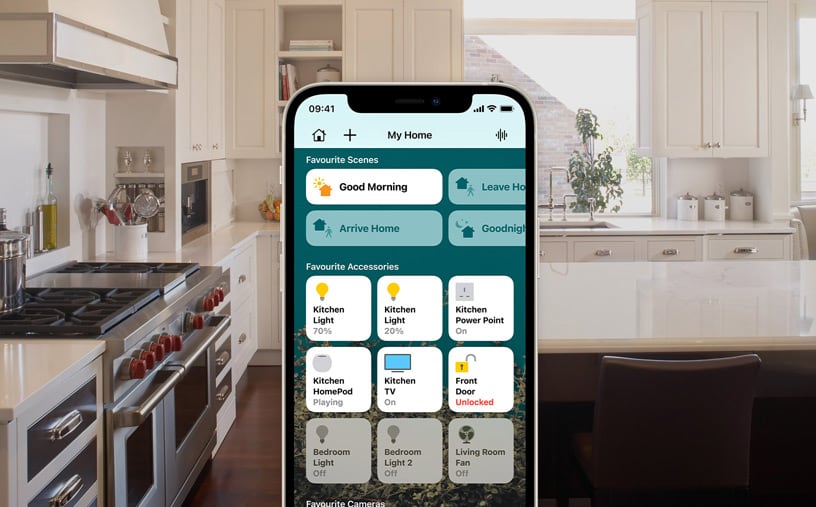
In recent years, Apple’s HomeKit has made significant progress in the smart-home sector, offering users a streamlined way to control their devices. However, despite these advances, HomeKit still has notable shortcomings compared with high-end smart-home systems such as Control4 and Home Assistant. In this blog post, we explore these shortcomings and discuss how Apple could enhance HomeKit to deliver a more seamless smart-home experience.
Limited Integration with Live TV
One of HomeKit’s most significant limitations is its integration with live TV setups. While traditional automation systems such as Control4 and Home Assistant allow comprehensive control of cable television, HomeKit’s capabilities are very limited. Users can turn the TV on and off and switch inputs, but that is where the functionality ends.
By contrast, systems such as Control4 enable users to integrate their entire entertainment setup into a single remote control and application. This integration allows intuitive voice control, making it easy to switch channels or bring up specific programs and sporting events. Imagine being able to control your cable box, Apple TV, Roku, and other devices from one interface—that is the level of convenience high-end systems provide.
For those who primarily stream content, this limitation may not be a deal breaker. However, for users who still rely on live TV, it is an important consideration when choosing a smart-home automation system.
Music Selection and Audio Control
Another area where HomeKit falls behind is music selection and audio distribution throughout the home. Although HomeKit allows basic music controls such as play and pause, it lacks the powerful functionality offered by dedicated audiovisual (AV) systems.
With systems such as Control4, users can enjoy a superior app experience that lets them browse music, select playlists, and control audio across multiple zones—all from one interface. This level of integration not only simplifies the user experience but also enhances the ability to create complex scenes and automations.
For example, imagine hosting a party where you want the lights dimmed, music playing throughout the house, and the TV set to a sports channel. With Control4, you can trigger a “Party Scene” that handles all of this seamlessly. By contrast, HomeKit users need to switch between apps to select music and face limitations when controlling the TV and audio sources.
In addition, HomeKit’s reliance on Apple Music as the sole music service for automations can be limiting. Users who prefer other platforms may find themselves at a disadvantage, further highlighting the need for Apple to expand its music-integration capabilities.
Security Camera Limitations
When it comes to security, HomeKit Secure Video has its strengths, but there are also significant limitations to address. One of the most obvious issues is the lack of a continuous recording option. Users often find that motion detection can miss important clips, while the 1080p video-quality limit is a drawback for those seeking higher-resolution footage.
Perhaps the most critical limitation is the inability to hardwire cameras. This reliance on Wi-Fi can lead to connectivity issues and requires regular charging or the use of power outlets, which can be inconvenient for outdoor cameras. Although some users have found workarounds, such as using Power over Ethernet (PoE) adapters, these solutions are not ideal.
By contrast, professional security systems offer hardwired camera options and continuous recording, ensuring that footage is captured even during an internet outage. In addition, advanced AI features for person and package detection provide a level of security that HomeKit currently cannot match.
The Home App Experience
The Home app itself is another area Apple needs to improve. Compared with the streamlined design of other smart-home apps, many users find its interface cluttered and less intuitive. Visual overload can make navigation challenging, especially for those who are not technically minded.
By contrast, apps such as Control4 feature larger icons and a more user-friendly layout, making it easier to access different rooms and devices. The ability to control content selection directly from the app without jumping between different interfaces is a significant advantage that HomeKit lacks.
To enhance the user experience, Apple could consider redesigning the Home app to resemble the Apple TV app, which integrates various content providers and allows seamless browsing and selection. By creating a more cohesive experience, Apple could elevate HomeKit and compete more effectively with other smart-home systems.
Conclusion: The Future of HomeKit
Apple’s HomeKit has undoubtedly come a long way since its inception, providing users with a solid foundation for smart-home automation. However, as we have explored, it falls short in several areas compared with high-end systems such as Control4 and Home Assistant.
By addressing limitations in live TV integration, music selection, security-camera capabilities, and the overall user experience of the Home app, Apple could significantly enhance HomeKit. As smart-home technology continues to evolve, Apple must adapt and innovate to meet users’ growing needs.
For those currently using HomeKit, we would love to hear about your experiences and any ways you have found to address these limitations. Share your thoughts in the comments below!
If you found this analysis helpful, consider subscribing for more insights, tips, and reviews on smart-home technology. Thank you for reading, and we look forward to exploring the future of smart homes with you!

